


Enemy Formation
In May 1968, as part of the wider General Offensive, units of the North Vietnamese Army (NVA) moved into the Bien Hoa–Long Binh approaches, aiming to disrupt allied bases and draw forces away from urban centres. Among them were experienced regiments tasked with locating and destroying newly established fire support bases—temporary artillery positions that projected allied power deep into contested ground.
To the NVA, Fire Support Bases Coral and Balmoral represented both threat and opportunity. Hastily established and, at first, imperfectly defended, they were seen as vulnerable targets. Night attacks were prepared with discipline and precision: reconnaissance patrols mapped wire, guns, and approach routes; sappers and infantry coordinated to breach perimeters under cover of darkness.
The assaults on Coral in mid-May were fierce. NVA troops advanced under artillery and mortar fire, pressing through defensive lines in close combat. Losses were heavy, but the attacks tested the resolve and organisation of the defenders.
At Balmoral, further assaults followed in late May, again marked by determination and repeated attempts to penetrate the base.
For the NVA, these battles were part of a broader strategy—accepting high casualties to fix and wear down allied forces, to challenge their dominance of the battlefield, and to demonstrate that no position was beyond reach. Though Coral and Balmoral were ultimately held, the engagements revealed the intensity of the conflict and the willingness of NVA soldiers to endure extreme conditions in pursuit of strategic goals.
Seen from the northern perspective, Coral–Balmoral was not simply a failed assault, but a measure of resolve: a costly, deliberate effort within a larger campaign that defined the war in 1968.
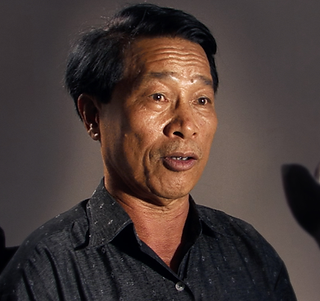
Meet Colonel Ban
This is Colonel Tran Xuan Ban. He was a North Vietnamese Army soldier who attacked Fire Support Patrol Base Coral on May 12/13 1968.
In 2006, Dr Leonie Jones, then Head of Film at the University of Southern Queensland, was deep in the work of memory. Alongside veterans of Coral–Balmoral, she had begun recording a remarkable collection of more than 150 audio-visual oral histories—voices shaped by time, experience, and a battle that had never quite left them. The project would form the basis of a documentary for the History Channel, but it had already become something more: an act of preservation, and of quiet reconciliation.
As the interviews unfolded, Leonie followed threads through archives, service records, and fragments of recollection. Piece by piece, she traced an unexpected path—one that led not only to Australian veterans, but to the other side of the battlefield. Through careful research, she located three former North Vietnamese Army soldiers who had fought at Coral–Balmoral, a battle they knew by a different name: Tan Yuen.
What followed was unprecedented. These NVA veterans agreed not only to share their stories, but to return—to stand once more on the ground where they had fought, and to meet those who had once been their enemies.
In that same year, a group of Australian veterans travelled back to Vietnam on a battlefield tour organised by veteran Gary Prendergast (B Coy 1 RAR). At Tan Yuen, the two groups came together. For the first time, former adversaries met face to face. There were no weapons now, only memory—stories exchanged across language and time, marked by respect, curiosity, and a shared understanding of what had been endured.
Leonie and her camera crew were there to witness it. On the very ground where the battle had once raged, they captured a moment of rare historical significance: not just the telling of two sides of a conflict, but the meeting of those who had lived it.
It was, in every sense, a return—and a beginning.

Garry Prendergast, Lieutenant B Coy 1st Royal Australian Regiment.

Veterans from both sides discuss Battle of Coral insitu with camera Daniel Maddock.

Peter Burquest talks about being back at FSPB Coral site and meeting Col. Ban.
Red Poppy White Rubber

Garry Prendergast never thought about sitting on the same bench in a tourism coach with a Vietnamese vet, who 40 years ago with his comrades made him and Australian soldiers have a hard time at Tan Uyen, Binh Duong. He said he decided to come back and to meet this vet was one of the best things he had done in his life.
That was November 14th, when Garry and 13 other Australian vets with their wives came back to Tan Uyen. Most of them came back for the first time, since they were young guys coming to VN and trapped in the sudden attacks of 141 Reg in 1968. The attacks that left too many questions in their minds years after that.
For the first time, the battle which is regarded as very important to Australians about the presence of them in Vietnam was filmed right at the scence with the vets from both sides retelling their experience.
The answer for the past
Garry concentrated looking at the maps with Colonel Tran Xuan Ban. Both were wearing glasses for old people, they pointed at the locations of the attacks and movements of both sides at Tan Uyen battle. Garry and other Australians then moved deeper into the rubber forests. They found the cover of a battery which they used for their radio some 40 years ago. They gave one another to have a closer look.
Under the rubber trees with sun shinning through the leaves, the vets stood in a round shape. They curiously asking Col. Ban about what they always had in mind about the battle: “How did the communist soldiers fight against them?”
-
We had few people so we had to be quick and sudden, we withdrew before you set up your base to fight against us. Otherwise, we would have lost more people.
-
That was a smart way. If we had know that you were fighting to protect your country’s independence, we would not have done the stupid thing that we came to your country,” Garry said, shaking Ban’s hand.
Wearing a sport short and blue T-shirt, Garry looked much younger than his 60 year old age. At 11am, he gave red paper poppy to other members in the group and recieved three insences from Col. Ban. They paid a silence minute to the dead soldiers. The big figures kneeled down in front of the memorial that remembered the Vietnamese people who died in the battles. They placed the poppy and the insences. There were tears on their cheeks.
“ I rememberd my comrades and Vietnamese soldiers in the battle. I feel sad because we both sides suffered loss”, Garry said, “I wanted to come back quite a long time to this place and pay my respect to the soldiers in the both sides.”
Col. Tran Xuan Ban, 65, had not come back to the battle for quite a long time. He also placed the poppy and the insences in the memorial. In 1968, he was the tactic consultant who fought against Garry’s team when he was 25. That was the only time he fought against Australian army.
Holding a brown square small bag beside, he said: “This time is also an opportunity for us to put aside the past, that we feel closer and remember of the dead, that we encourage each other. When we were young, we met in a not so nice circumstance. Now it is time we close the past and look forward to a better future.”
Special Day
November 11th was a special day for Garry when he felt so much released after he was told that the mass grave of Vietnamese soldiers that he and his team created was found. All of remains were digged up and burried in a nearby cemetary. He used to want to show Vietnamese that grave, but in the previous time when he came back, he did not bring his la ba, so he did not know where to show.
“Today is special day for my life. I feel so much released,” He picked up the speaker and told the team immediately after he heard the news.
The first time Garry came back to VN with 55 other Australian vets was in 1998. Two years after that, he came back again. “I feel the best this time,” he said about his third visit.
Three Australian vets were trying to readjust the bow attaching to a rubber tree by a thin black plastic rob to recieve the rubber. The rob was too small to keep the bow firm. The big hands were trying to put the bow back to the right place. The right place to recieve...
The battle at Tan Uyen lasted 25 days during May and June 1968, when Australian soldiers were responsible for preventing Vietnameses to approach and liberate Sai Gon. For the first time in Vietnam battle, the Australians were attacked right at their base when they just arrived in, not when they were patrolling and ambushed. “This is a good experience when we had Australian and Vietnamese vets meeting for the first time to tell about the battle. This is important historical documentary for the Australians. The meeting with Col. Ban today is special and brings some comfort to our vets. We can not change the past but the relationship between the Australians and Vietnamese is very good at the moment. Meetings like this only makes the relationship better.”
Thanks to Dr Leonie Jones
By Loan Khong
Note: “Reprinted with the permission of Tuoi Tre Newspaper in Vietnam”
Translated from Vietnamese to English
Photo: Garry Prendergast & Tran Xuan Ban
North Vietnamese
Enemy Units
The following enemy units and infiltration groups were identified as involved in the Battles of Fire Support Patrol bases Coral and Balmoral:
-
7th NVA Division which included (141 NVA Regt & 165 NVA Regt)
141 NVA Regiment (including K2 K3 and K5 Battalions)
165 NVA Regiment
85 NVA Regiment including C8 Company D27 Battalion
32 Infiltration Group
165 " "
233 " "
269 " "
275 " "
D280 " "
745 " "
Nam Ha " "
C17 Recoilless Rifle Company
C18 Anti Aircraft Company
5 VC Division 274 and 275 VC Regiments were also susoected of being in the
area.
There would have also been VC guides in the area but these would have been
limited to perhaps village level VC who had an intimate knowlege of the
area.
(Many major VC units had been decimated during the TET Offensive when the
north told them to start the fight and once the allies were fully
committed they would join the fray... This did not happen though and the
north sat back, with the exception of Hue and Tet the VC take heavy
casualties. Less problems for the north after 1975 as a result.)